Do Your Part

Good Mate For Boaters

Tips to help boaters keep our ocean clean and healthy while on the water and at the dock.

Green Boating For Boaters - A boat rests in front of the lighthouse in Prospect Harbor, Maine. Photo by Flickr User Justin Russell, used under a creative commons license.

Mishandling a boat can harm ecosystems, wildlife and water quality. Damage occurs through improper handling, irresponsible use or the neglect of vessel maintenance, such as when a boat is anchored improperly, operated in shallow water (or runs aground in a sensitive area), operated without regard to aquatic animals, or improperly maintained or neglected, which can result in a sinking vessel.

Opportunities to green your boating habits don't stop once you step off your boat either; refueling, maintenance, repair and storage of your vessel all present environmental risks. Reducing these risks will not only preserve clean water and protect the animals that live in it, but will keep you and your family safe — and could even save you money.

Following these guidelines on eco-friendly boat operation, maintenance and repair will help you ensure great boating experiences for generations to come.

Practice “Plus-One Boating.”

Practice "Plus-One Boating" by bringing back everything you take out on your trip—plus one piece of litter from someone else's wasteful wake. Make sure to bring all food containers, cigarette butts and other trash back to shore and use the marina’s garbage or recycling facilities to dispose of it. More than an eyesore, trash in the water impacts the health of humans, wildlife, ecosystems and economies.

  • If a piece of trash blows into the water, retrieve it immediately. Seize the opportunity to practice “man overboard” drills by calling “Trash overboard!” Leave trash in the water, and an animal that mistakes it for food can choke or experience a false sense of fullness and starve.
  • Remind others that it is illegal to discard plastic trash into the water, and encourage them to bring it back to shore for recycling. Birds, fish and other animals that become entangled in debris such as fishing line can’t properly swim, feed or mate, and may drown. Additionally, boaters can face expensive repairs when marine debris entangles a propeller, clogs an engine or scars a hull.
  • Report any dumping you witness to the U.S. Coast Guard Marine Safety Office. Many kinds of trash can leach toxic chemicals, and cleanup costs taxpayers and business-owners millions of dollars.

Anchor wisely!

Use the appropriate ground tackle for the type of bottom (sand, mud or rock), and always check your charts or use a depth finder to locate appropriate holding grounds.

Underwater damage caused by a single anchor might seem small, but the cumulative effects of many individuals add up to serious long-term damage. Aquatic grass, a nursery habitat for young fish, seldom re-grows in exposed sandy areas, and coral damage often invites disease.

  • Use existing mooring buoys as much as possible, but DO NOT attempt to motor across a shallow reef to reach one.
  • Lower the anchor gently. If you hear a grumbling noise, indicating you have hit a reef or rocky substrate, move to another spot.
  • Communicate with other boaters in the area. Let them know if you find an appropriate anchorage, or hail nearby boaters if you need assistance finding a safe anchoring bed or set mooring.

If you accidentally run aground, DO NOT try to motor your way out.

Of course, you should try to avoid running aground, but accidents happen. If you run aground in a small boat, use a paddle or an oar to pole your way out from the same direction the boat entered. If in a larger vessel, radio, call or hail for assistance or a tow.

Navigating a vessel through shallow waters can cause significant environmental damage. As boats travel into shallow water, their propellers may cut into aquatic grass beds, often trenching the bottom and removing all grass blades and even sediment. This is particularly true of personal watercraft that use powerful water jet propulsion systems. Natural recovery of damaged grasses takes from three to 10 years.

  • Consult an official and up-to-date nautical chart.
  • Follow channel markers and heed buoy warnings.
  • Use the depth sounder.
  • Pay attention to the water patterns. Shoals and shallow areas can be detected early on if you pay attention to the surface water around your vessel.
  • Always wear your life jacket while on board and have Personal Flotation Devices (PFDs) readily available in an emergency.

Know your water colors: Use these helpful reminders to aid you in avoiding water that is too shallow.

  • Brown, brown, run aground: These shallows could contain land formations or aquatic grass beds.
  • While, white, run aground you might: Sand bars, which appear white, can be shallower than they look. Navigate with caution.
  • Green, green, nice and clean: These areas are usually free of shallows, but consult current marine charts to be sure.
  • Blue, blue, cruise on through: These deep-water areas are free of reefs or grass beds, but remember that reefs and rocks rise abruptly, so give yourself plenty of time to maneuver.

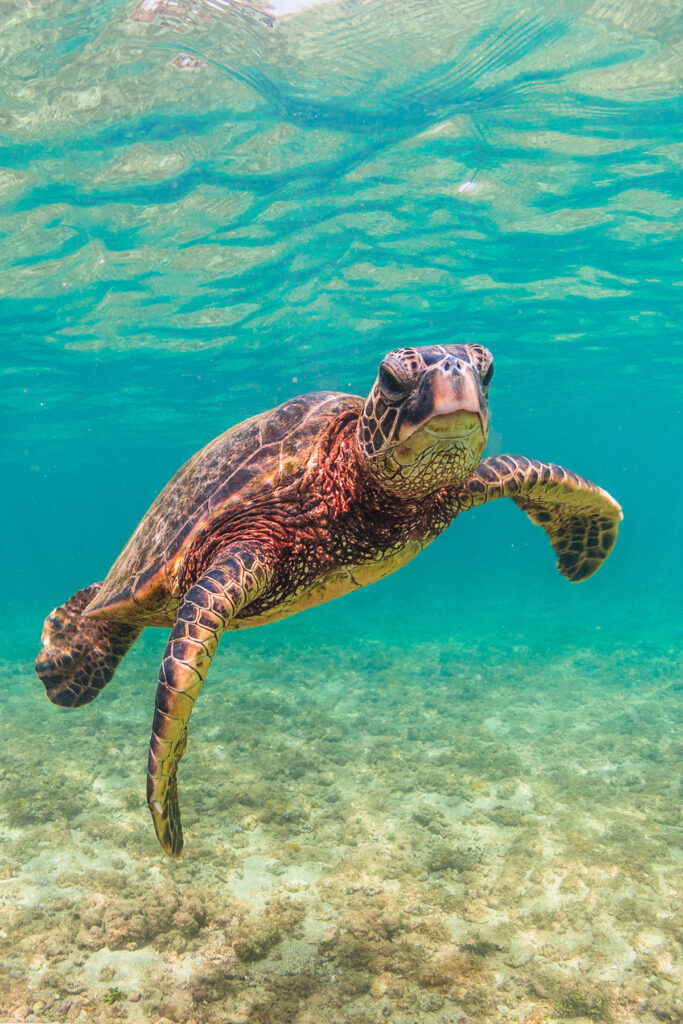
Understand procedures on interacting with wildlife, especially aquatic mammals and sea turtles.

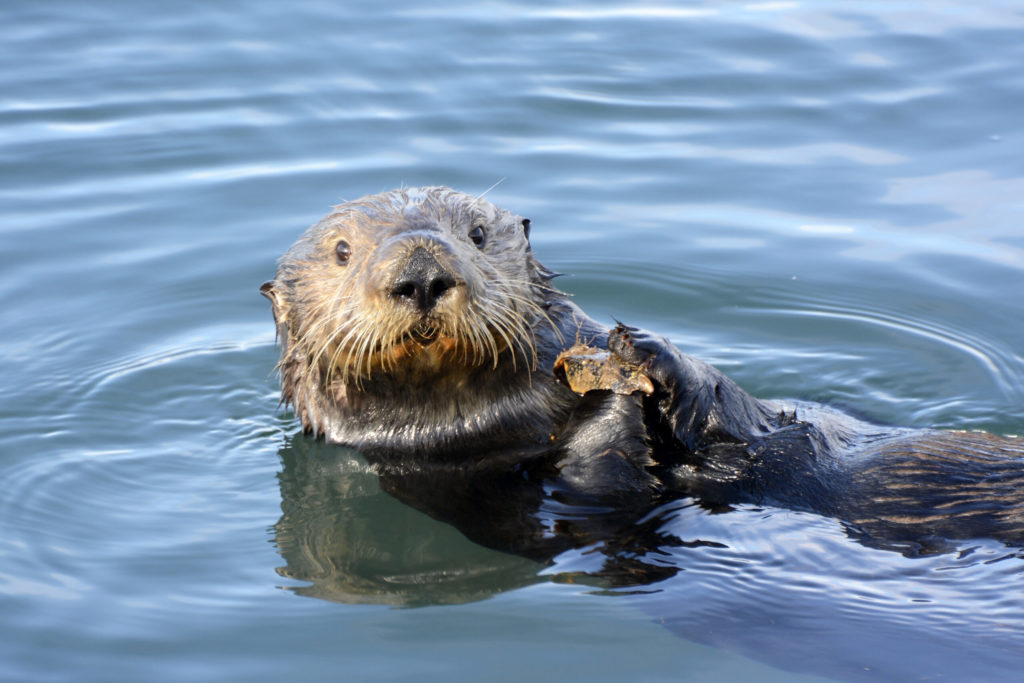
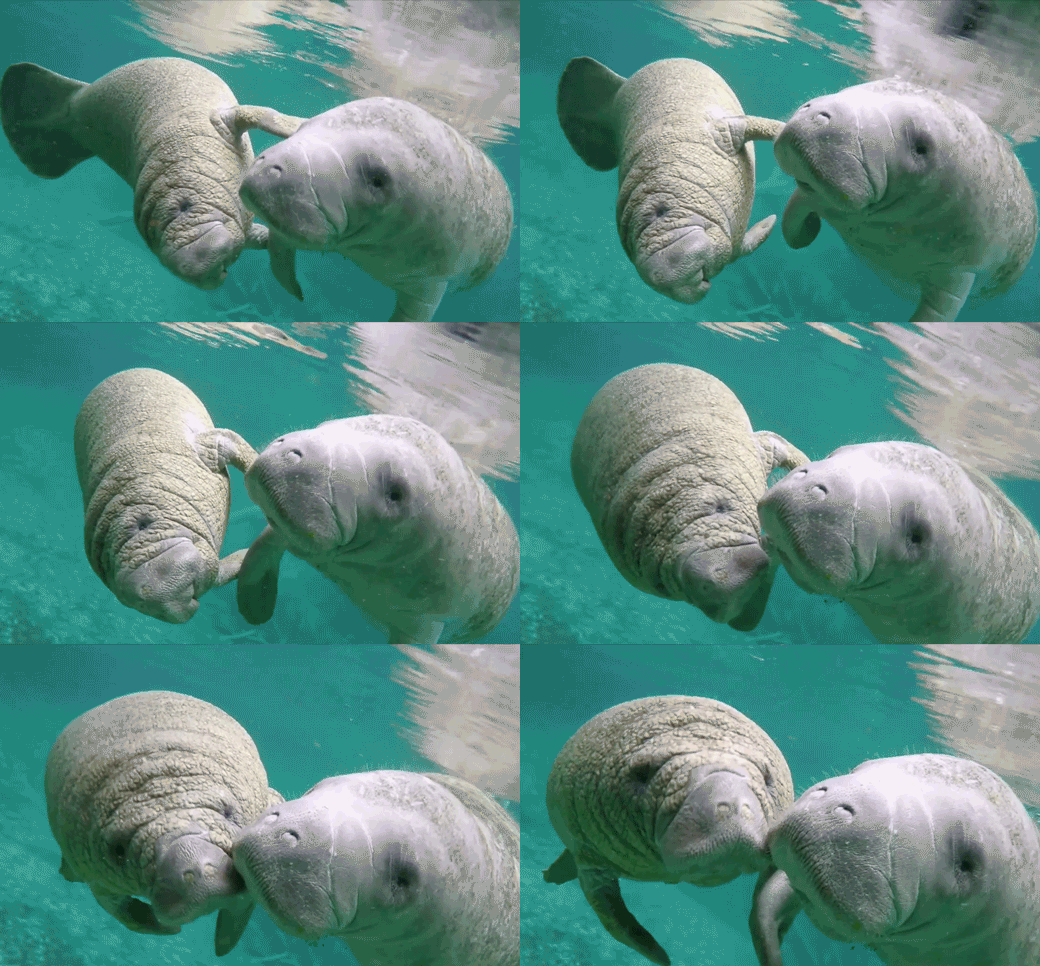
As a rule, boaters should always slow their boat when approaching an aquatic animal. States differ in their local laws, but it is always illegal under federal law to feed, harass, molest or injure aquatic mammals such as whales, dolphins, manatees or sea otters. Any activity that forces a protected or endangered animal to change its behavior is considered harassment.

  • When observing an aquatic animal, maintain a safe distance of 100 yards (500 yards for the highly endangered northern right whale). Always check local regulations, which could be stricter.
  • Maintain a safe speed at all times to prevent harm to yourself or wildlife. Traveling at high speeds impairs a boater’s ability to see sandbars, submerged obstacles, dangerous shoals or animals in the water, which could lead to serious accidents. Additionally, excessive wake in sensitive areas can damage shorelines and nearshore habitats.

Verify your vessel as “stowaway-free” before leaving the water to avoid transfer of exotic species.

Many invasive species epidemics begin with the update and discharge of ballast water from ships. Recreational boaters can also spread exotic species when boats or equipment are moved from one body of water to another or when unused bait is dumped into the water.

Invasive species may have no natural predators in a new environment, leaving them free to reproduce unchecked. In addition, they can alter the ecosystem by preying voraciously on native marine life. They can also have significant economic impacts: the zebra mussel, which can clog pipes, cost the Great Lakes region alone about $5 billion in nuisance control in 2000.

  • When leaving the water, inspect your boat and remove all hitchhiking animal and plant life from the hull, trailer, propeller, intake areas and all equipment. Also drain and flush the engine cooling system, live wells, bilge and bait buckets with very hot water if possible. If hot water is not available, use tap water.
  • Rinse your boat and all areas that get wet with tap water. Make sure to include trailer frames and wheels, safety light compartments, decking and the lower portion of the motor cooling system. DO NOT use salt and/or chlorine water mixtures. Runoff of these mixtures could enter the waterway, where they would be harmful to native aquatic organisms. Also, these mixtures can damage boat equipment.
  • Air-dry your boat and other equipment three to five days before using in a new water body. Some invasive species, like the zebra mussel, can live for at least 48 hours out of water.
  • DO NOT dump unused bait or its packing material into the water. While bait may be bought locally, it is often shipped from farther away. People fishing aboard boats may discard live bait fish without realizing these can become dangerous invaders.

Prevent human waste from entering the water.

Discharge of raw sewage from a vessel within three nautical miles of the U.S. coastline and Great Lakes is illegal. By keeping onboard toilets in line with sanitation laws, you can prevent potential disease-causing pathogens from infecting swimmers and shellfish.

Think one boat doesn’t make a difference? A single overboard discharge of human waste in a bay or other enclosed area can be detected across a whole square mile.

  • Use a Marine Sanitation Device (MSD) as required by law to keep sewage and chemicals out of the water. Human waste contains nutrients that can stimulate algae growth, depleting the amount of oxygen in the water. This process, called eutrophication, leads to foul odors and can result in harm to aquatic life, such as mass fish kills.
  • Close any direct flow-through system when navigating within three nautical miles of the U.S. coastline or in a “no-discharge” zone. If your MSD is equipped with a Y-valve, the valve should be closed or set in the inboard positions.
  • Bring portable toilets ashore for proper disposal of sewage. Pathogenic contaminants such as streptococci, fecal coliform and other bacteria may cause infectious hepatitis, diarrhea, bacillary dysentery, skin rashes, and even typhoid and cholera.
  • Patronize marinas that offer pumpout services and encourage the development of more stationary pumpout stations as well as portable services.
  • Use onshore restroom facilities when at the dock. And if you have a canine boating companion, pick up after your pet at the marina.

Watch out for sea grass beds.

Sea grass beds provide food, shelter and nursery grounds for all kinds of marine life, from sea turtles and snapper to the microscopic plankton that sustains them. You might think that a propeller cutting the grass blades is no big deal, but boaters should understand the complex root system of these plants; a slip of the propeller can actually inflict significant harm that creates a domino effect for sea life.

Properly dispose of all trash.

Whether you produce it at the marina or bring it in from your boating trip, trash in the water impacts the health of humans, wildlife, ecosystems and economies.

  • Recycle when possible, and make sure to use a container with a lid to prevent litter from blowing into the water.
  • Learn more about hazardous waste disposal by contacting the city, county or state boating agency and department of environmental quality.
  • Recycle plastic shrink-wrap. Plastic sheeting used for boat storage can entangle wildlife and smother habitat. Check with your state or local government for options.
  • Remove all fishing line from the water for proper disposal. Birds, fish and other animals that become entangled in debris including fishing line, string and ropes can't properly swim, feed or mate, and may drown. Additionally, boaters can face expensive repairs when fishing line entangles a propeller.

Inspect your boat regularly to maintain a seaworthy vessel.

Vessel operation damage can be costly for you—and for the health of the marine environment. An "un-seaworthy" vessel is not only a threat to passenger safety but is also at greater risk of sinking and releasing fuel, oil, sewage and toxic chemicals into the water.

  • Regularly inspect your boat's through-hull fittings, such as the depth finder transponder and cooling-water intakes, for leakage to reduce the risk of sinking. A sinking vessel not only poses a great safety risk to its passengers, but an unmanned vessel sinking at its dock or anchorage can also result in a substantial introduction of fuel, oil and chemicals into the water.
  • Always conduct a visual inspection of your boat after a particularly hard rain. Accumulated rain in the bilge can quickly over-burden a bilge pump system and cause the vessel to sink.

Reduce fuel and oil pollution.

Oil from recreational boats can come from dirty ballast water, oil tank washings, bilge water, slops, sludges, fuel residues, and waste oil. While almost everyone is familiar with the effects of large disasters such as the Exxon Valdez oil spill, many are not as familiar with the effects of smaller, everyday types of spills. Yet every year Americans spill, throw away or dump out more than 30 times the amount of oil spilled in the Exxon Valdez disaster in Prince William Sound.

Gas, diesel fuel and motor oil are not only toxic to people, plants and wildlife, they can block life-giving sunlight in the water. Even small oil spills spell SOS for water quality. A single quart of oil can create a two-acre oil slick, about the size of three football fields. Trying to help, some boaters may try to disperse oil on the water with dish detergent, but this actually adds pollutants to the water and also causes the petroleum to sink down and contaminate the bottom sediment. Use absorbent pads instead.

  • Fill your tank up 90 percent to reduce the chance of overflow, keeping in mind that most spills happen during refueling. Allowing room for expansion due to heat will also provide greater fuel efficiency.
  • When refilling, cover the air vent with a rag to absorb any overflow.
  • Consider purchasing an overflow attachment for the air vent on your fuel tank. These act as fuel/air separators that release air and vapor, but will also contain overflowing fuel.
  • Use oil absorbent pads or booms in the bilges of all boats with inboard engines. When pumped from a bilge, petroleum hydrocarbons may settle in the sediments on the bottom or remain suspended in the water.
  • Recycle used oil and oil filters. Oil can be reprocessed into fuel for other uses, while the steel in filters can be used to make cans, cars and appliances. To find a recycling center near you, click here

Prevent toxic cleaning products from entering nearshore waters when washing your boat.

Many cleaning products are safe to use in our homes because household wastewater is usually treated at treatment plants before being discharged into local waterways. However, when used on boats, those same cleaners can be discharged directly into the water without any treatment—and may be lethal to aquatic life.

Scrubbing and using abrasives on boats in the water creates pollution. A plume of blue or red when a bottom is being scrubbed means that copper particles are being released into the water column. Scrub only hard-finish bottom paints in the water. Gently sponging soft-painted bottoms will not release as much paint, and the paint job will last longer.

  • Rinse only with fresh water after each use. A good freshwater rinse can help stop organism growth and will extend the life of the boat’s protective paint coating. Rinsing after each use also reduces the need for cleansers and heavy-duty products.
  • Look for catch basins or other collection systems at the posted wash areas of your marina, and use them. Such systems stop paint resins, chips and other hazardous products from entering the aquatic environment. If your marina does not have such a system, encourage them to install one.
  • Use old-fashioned and less harmful cleaning methods, including baking soda, vinegar, lemon juice, borax and "elbow grease."

Ask your marina store to stock environmentally friendly cleaning products.

Rather than selecting harsh cleansers, boaters should purchase the least toxic product available to do the job. Examine the warning label: If it is hazardous to humans, it is hazardous to the aquatic environment.

Pay special attention to traditional teak cleaners, which are caustic. They contain strong chemicals for bleaching the teak. Any product that recommends the user wear rubber gloves or take special safety precautions is harmful to the environment as well.

  • Look for the words "phosphate-free" and "biodegradable" on the product label. Cleaners and detergents may add nutrients (phosphorus, nitrogen) to local waters. Excess nutrients degrade water quality and promote excess algae growth that leads to algal blooms, which deplete oxygen levels in the water.
  • Buy only what you need. The smaller the product container, the smaller the potential spill.
  • Keep open cleaning products or degreasers away from the open deck. Chemical degreasers cause finfish to lose the natural oils required for oxygen exchange along their gills, and the fish may suffocate.
  • Clean spills with a rag (instead of hosing) and make sure you dispose of the rag safely or stow it to clean other spills.
  • Share your leftover supplies with other boaters or dispose of them safely and properly onshore according to product labeling or the marina operator.

Use a vacuum sander.

A vacuum tool collects and stores paint particles. Sanding and scraping a boat can release paint and varnish particles into the air and water around you. Toxic dust particles can irritate a person's lungs and eyes, and can also affect the health and reproductive systems of fish, birds, crabs and other sea life.

  • Conduct all sanding and scraping on shore, away from the water and preferably in a dedicated work area. Sanding near the water can lead to increased particulate matter in the water column, which reduces sunlight below the water's surface and inhibits photosynthesis. This limits the growth of aquatic grass beds, a crucial nursery habitat and home to many small organisms.
  • Lay tarps under the work area to catch loose particles and use a vacuum to remove the loose material. If a vacuum is not available, lift the tarp, collect the scrapings into a sealed container and dispose of it on shore.

When painting, consider using less-damaging alternatives to traditional products.

These alternatives effectively protect the hull from algae, barnacles and other growth without harmful pesticides and metals. Some contain ingredients such as silicone or Teflon, while others contain intense concentrations of organic ingredients, such as cayenne pepper.

  • Conduct all paint work on shore in a dedicated work area using a tarp to capture drips and spills.
  • Slow organism growth by rinsing and wiping the hull with fresh water after each use and applying a good coat of wax each season. To eliminate the need for antifouling paints, dry dock or haul the boat after each use.

Maintain your engine.

Routine maintenance on a boat and its engine can improve boat and engine operation. A clean, well-operating boat lasts longer and reduces the amount of pollutants entering the water.

  • Tune the engine regularly. Steam clean the engine in a dedicated service area, rather than using harmful engine cleaners. In turn, the engine will operate more cleanly, increase its fuel efficiency and last longer.
  • Inspect the fuel lines routinely. Failure to properly maintain a fuel system can lead to a catastrophic explosion. Unleaded fuels can contain alcohol, which corrodes rubber hoses. If there are signs of deterioration—dry, cracked areas or soft, tender spots—replace the hoses immediately with fresh ones.
  • Use non-toxic bilge cleaners. Many bilge cleaners are harmful to the environment since they merely break down oil into microscopic fragments that are pumped out in the bilge water. Several non-toxic bilge cleaners actually contain microbes that digest hydrocarbons rather than emulsifying them. A marine dealer should have more product information. Dispose of all maintenance products and chemicals properly. Do not throw them in the water or down a storm drain.

Maintain safety equipment, and take care when disposing of batteries and flares.

  • Deliver lead acid batteries to a lead acid battery retailer or wholesaler for proper disposal, or to a collection or recycling facility authorized by the U.S. Environmental Protection Agency or your state’s department of environmental quality.
  • Keep expired marine flares onboard as a back-up for new flares or donate them to vessel safety training programs. If you keep them onboard, remember to store them separately from new flares. If they must be disposed of unused, treat them as hazardous waste. Contact the appropriate agency in your state for proper disposal requirements.

Join the Fight for a Healthy Ocean

Help keep the ocean healthy for sea turtles, polar bears, whales and people like you.

Features

Good Mate

Ocean and waterway conservation for boaters and marina operators.

Good Mate for Marinas

When you take the steps to green your marina, everyone wins: clean water is good for boating and for business.

Ocean Conservancy makes careful use of your support, and holds high ratings from charity watchdogs.
BBB Accredited Charity Charity Navigator - your guide to intelligent giving